
Commercial EPDM Rubber Roofing for Flat & Low-Slope Roofs
DK Commercial Roofing provides EPDM roofing in Orange County for commercial properties that need a flexible single-ply rubber membrane system for installation, repair, or replacement. EPDM is a long-established commercial roofing material commonly used on flat and low-slope roofs where flexibility, large membrane sheets, and proven rubber-roofing performance are important considerations.
A Proven Rubber Roofing System for Commercial Buildings
EPDM commercial roofing uses a synthetic rubber membrane installed over a compatible commercial roof assembly. The material is commonly used on flat and low-slope buildings and is available in large sheets that can reduce the number of field seams compared with smaller-sheet systems.
EPDM is different from thermoplastic systems like TPO roofing and PVC roofing . Rather than relying on heat-welded seams, EPDM systems typically use compatible adhesives, tapes, primers, and flashing materials for seams and details.
For Orange County properties, EPDM may be used for commercial roof installation , localized EPDM roof repair , or EPDM roof replacement depending on the roof condition and building needs.

Why Property Owners Consider EPDM Rubber Roofing
EPDM remains a common commercial roofing option because of its flexibility, large-sheet membrane format, repairability, and long history in low-slope roofing applications.
Flexible Membrane
EPDM rubber remains flexible and can accommodate many commercial roof layouts, penetrations, curbs, and building details.
Large Sheet Coverage
Larger membrane sheets can reduce the number of field seams on selected roof layouts, depending on the system and installation approach.
Repairable Details
Compatible EPDM patches, seam materials, flashing products, and adhesives can be used for targeted repairs when the surrounding roof remains serviceable.
Commercial Versatility
EPDM can be evaluated for warehouses, offices, apartments, schools, churches, retail properties, and other flat-roof commercial buildings.
Rubber Roofing Still Depends on Proper Seams & Flashing
EPDM can cover large roof areas efficiently, but the vulnerable points remain similar to other commercial roofing systems: seams, walls, penetrations, drains, curbs, equipment, roof edges, and areas exposed to frequent service traffic.
Regular commercial roof inspections and commercial roof maintenance can help catch developing seam, flashing, drainage, and membrane problems before they become more disruptive.
Seam Materials
EPDM seams rely on compatible tapes, adhesives, primers, or system-specific materials rather than heat welding.
Walls & Penetrations
Curbs, walls, penetrations, edges, and transitions require compatible EPDM flashing materials integrated into the membrane system.
Drainage Details
Drains, scuppers, low areas, and water-flow paths need attention because standing water can expose weak seams or deteriorated details.
Rooftop Service Areas
HVAC work, maintenance access, solar-related activity, and regular foot traffic can create punctures, abrasion, and localized membrane wear.
Flexible Roofing for Working Properties

From Roof Evaluation to Finished Rubber Membrane
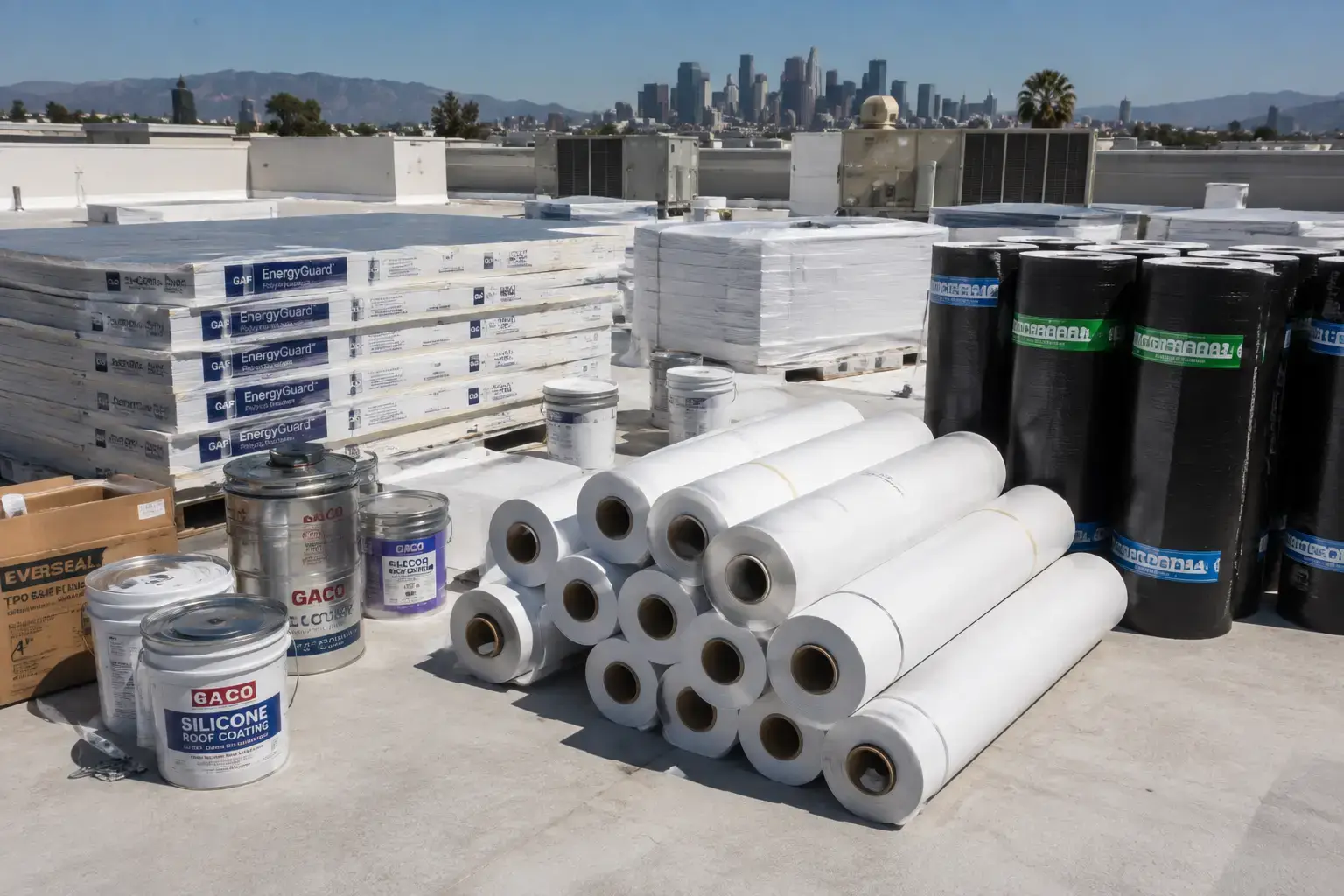
EPDM installation should move from evaluation and substrate preparation through membrane placement, seam work, flashing, detailing, and final review.
Evaluate
Review the building, roof deck or substrate, existing roofing, drainage, equipment, penetrations, access, and project requirements.
Prepare
Complete required deck, insulation, cover-board, or substrate work so the roof assembly is ready for EPDM membrane installation.
Install Membrane
Place and secure the selected EPDM membrane using a compatible system and attachment method.
Seal & Flash
Complete seams and flashing around walls, drains, penetrations, curbs, roof edges, and equipment using compatible EPDM materials.
Inspect & Maintain
Review the finished roof and continue monitoring seams, flashing, drains, punctures, traffic areas, and penetrations through regular maintenance.
EPDM Roofing for Orange County Buildings
EPDM can be evaluated for many flat and low-slope commercial buildings when the roof design, substrate, drainage, exposure, and maintenance needs support the system.
Warehouses
Large roof areas where flexible membrane coverage, drainage, equipment, service traffic, and maintenance access are important.
Office Buildings
EPDM roofing around occupied tenant spaces, HVAC equipment, drains, parapets, and roof-access areas.
Apartments & HOAs
Rubber roofing for compatible multifamily low-slope roof sections with residents, common spaces, and property management needs.
Retail Centers
Commercial EPDM systems for active retail properties with tenant spaces, rooftop equipment, drains, and service traffic.
Churches
EPDM roofing for flat or low-slope areas over sanctuaries, classrooms, offices, fellowship areas, and related buildings.
Schools
Commercial rubber roofing around classrooms, offices, gyms, cafeterias, drains, and rooftop mechanical equipment.
Industrial Facilities
EPDM may be evaluated for selected low-slope industrial roofs depending on equipment, exposure, drainage, and operating conditions.
Mixed-Use Properties
EPDM roofing for commercial buildings with multiple roof zones, tenants, equipment areas, and maintenance requirements.
The Roof Condition Determines The Right Service
EPDM roofing needs depend on membrane age, seam condition, flashing, punctures, drainage, moisture, previous repairs, and overall roof serviceability.
EPDM Roof Installation
New construction, additions, or major roofing projects may use EPDM as part of a new commercial roof installation .
EPDM Roof Repair
Localized seam failures, punctures, flashing problems, drain details, or penetration issues may be candidates for targeted EPDM roof repair .
EPDM Roof Replacement
Widespread deterioration, recurring leaks, extensive membrane failure, moisture concerns, or repeated repair history may justify EPDM roof replacement .
Commercial EPDM Roofing Across Orange County
DK Commercial Roofing provides EPDM roofing services in Orange County for commercial flat and low-slope roofs that need installation, repair, inspection, maintenance, or replacement. The right scope depends on the existing roof condition, building design, drainage, penetrations, rooftop use, and long-term roofing plan.
For location-specific commercial roofing information, visit our Anaheim commercial roofing and Irvine commercial roofing pages.
Related Orange County Roofing Services
EPDM projects often connect with TPO and PVC comparisons, installation, repair, maintenance, inspection, replacement, and roof-coating decisions.
Questions About EPDM Commercial Roofing?
EPDM is a long-established rubber roofing membrane for commercial flat and low-slope roofs, but performance still depends on the complete roof assembly and proper maintenance.