
Fast Help for Active Commercial Roof Leaks & Damage
DK Commercial Roofing provides emergency commercial roof repair in Orange County for active leaks, sudden membrane damage, failed flashing, punctures, storm-related roof issues, and other urgent commercial roofing problems. The first goal is to understand the source and severity of the problem, reduce additional exposure where practical, and determine the right repair path for the roof.
When a Commercial Roof Leak Cannot Wait
An active commercial roof leak can affect more than the roofing system. Water may threaten ceilings, insulation, electrical components, equipment, inventory, tenant spaces, offices, classrooms, retail areas, or occupied portions of the building.
Urgent roofing work should begin by identifying the visible roof conditions connected to the leak. The interior water location may not be directly below the exterior entry point, so seams, flashing, penetrations, drains, curbs, rooftop equipment, previous repairs, and surrounding membrane areas may all need to be considered.
Once the immediate issue is understood, the next step may be a targeted commercial roof repair, temporary stabilization followed by permanent work, or—if damage is widespread—evaluation for commercial roof replacement.
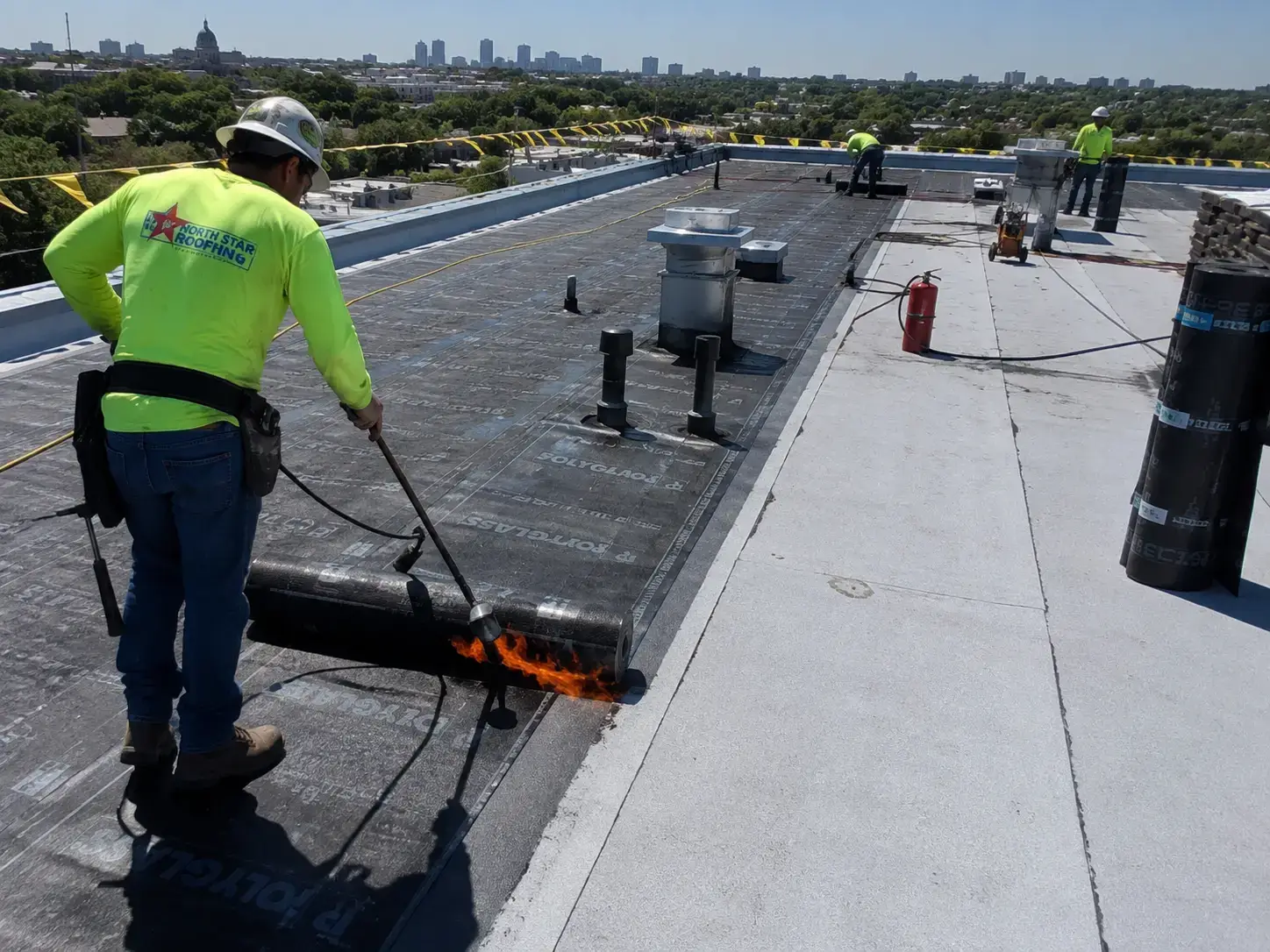
Urgent Problems That Can Lead to Water Intrusion
Some emergencies develop suddenly. Others are older roofing problems that finally become visible during heavy rain, rooftop service activity, or continued deterioration.
Failed Seams
Open or deteriorated seams can allow water beneath a membrane, especially where aging, movement, or previous repairs have affected the detail.
Punctures & Tears
Foot traffic, dropped tools, service work, equipment, sharp debris, and rooftop activity can damage commercial roof membranes.
Flashing Failures
Walls, curbs, penetrations, parapets, edges, and equipment transitions can become urgent leak points when flashing deteriorates or separates.
Drainage Problems
Blocked drains, scuppers, ponding water, debris, and poor water flow can increase stress on vulnerable roof areas and expose existing deficiencies.
Skylight Leaks
Failed seals, curbs, flashing, or surrounding roofing can create sudden interior water around commercial skylights and roof openings.
Rooftop Equipment
HVAC, solar, conduit, supports, mechanical service, and equipment changes can create damage or disturb existing roof details.
Previous Repair Failure
Older patches and repair materials can separate, crack, weather, or become recurring trouble areas under continued exposure.
Wind & Weather Damage
Wind-driven debris, movement, heavy rain, and weather exposure can turn a developing roof weakness into an active leak.
Protect the Building While You Get Roofing Help
If water is entering the building, the first priority is people and property below the leak. Move occupants, equipment, products, documents, electronics, and other vulnerable items away from the affected area when it can be done safely.
Avoid climbing onto a wet, storm-damaged, or unfamiliar commercial roof. Roof surfaces can be slippery, unstable, concealed by water, or dangerous near electrical systems and rooftop equipment.
Protect People & Property
Keep occupants clear of affected ceilings, wet electrical areas, falling materials, and areas where water may create a slip hazard.
Document the Leak
Photos of interior water, ceiling staining, visible exterior conditions from safe areas, and prior repair records can help explain the situation.
Contact Roofing Help
Provide the property address, building type, leak location, when the problem began, weather conditions, and known repair history.
Do Not Make Unsafe Roof Access
Do not enter hazardous rooftop areas, walk through ponding water, or attempt repairs around unsafe electrical or structural conditions.
Find the Vulnerable Detail and Address the Cause
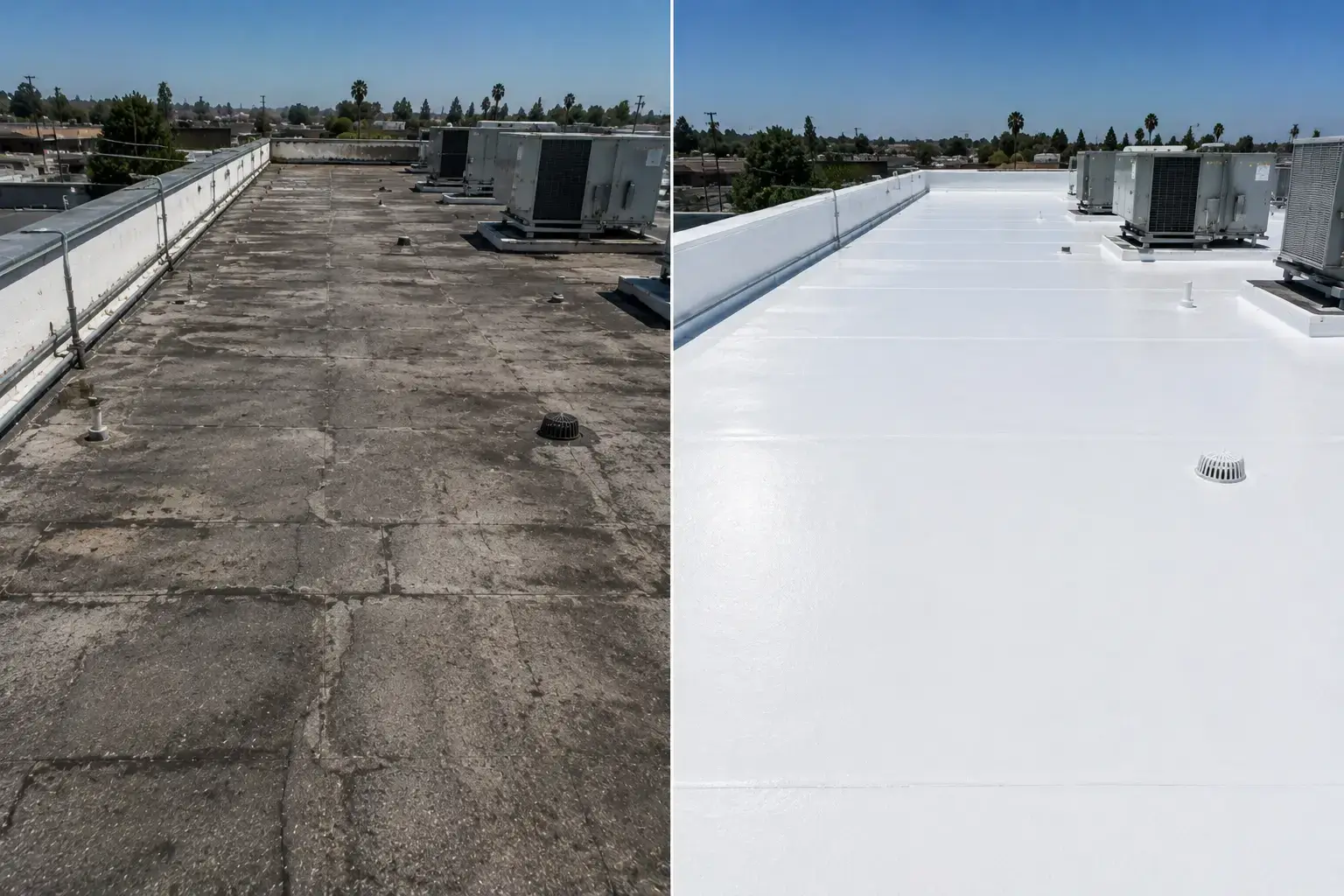
From Active Leak to Practical Next Step
Urgent commercial roofing needs a focused process: understand the problem, control immediate exposure where practical, and determine what the roof needs after the emergency.
Gather Details
Review the property location, active leak area, building use, weather conditions, roof type, previous repairs, and immediate interior concerns.
Review the Roof
Evaluate accessible membrane areas, seams, flashing, drains, penetrations, curbs, equipment, and likely leak-source conditions.
Control Exposure
Where appropriate, perform temporary stabilization or immediate repair work intended to reduce continued water entry and further roof exposure.
Complete Permanent Repair
Address the actual roofing deficiency with compatible repair methods when site conditions and the roof system allow.
Plan Follow-Up
Determine whether the roof also needs maintenance, a broader roof inspection, restoration, or replacement planning.
Urgent Roof Repair for Working Buildings
The consequences of a leak depend on what is below the roof. Commercial emergency repair should account for occupants, equipment, inventory, residents, customers, operations, and interior spaces.
Warehouses
Urgent leak repair where inventory, stored products, equipment, drains, penetrations, and large open roof areas may be affected.
Office Buildings
Emergency roofing around occupied tenant spaces, ceilings, electronics, HVAC systems, and active workplace environments.
Retail Centers
Roof leak response around stores, customer areas, tenant spaces, inventory, signage, rooftop equipment, and deliveries.
Industrial Facilities
Urgent commercial roof repair around equipment, penetrations, production areas, electrical systems, and active operations.
Apartments & HOAs
Leak response where residents, units, common areas, property management, shared roofs, and interior finishes may be affected.
Churches
Emergency roof repair for sanctuaries, offices, classrooms, fellowship areas, and other occupied building spaces.
Schools
Urgent roofing around classrooms, offices, gyms, cafeterias, technology, equipment, and active campus areas.
Mixed-Use Properties
Emergency commercial roofing where multiple tenants, property uses, access requirements, and interior spaces must be considered.
Emergency Repair Should Lead to a Longer-Term Roofing Plan
Stopping water entry is important, but the emergency can also reveal broader roof conditions that deserve follow-up.
Inspect the Surrounding Roof
A broader commercial roof inspection can help identify nearby seams, flashing, drainage, penetrations, and aging areas that may become the next leak point.
Build a Maintenance Plan
For a roof that remains serviceable, commercial roof maintenance can help monitor repairs, drains, seams, equipment areas, and other vulnerable details.
Evaluate Larger Roofing Work
Repeated emergencies, widespread deterioration, or multiple recurring leaks may justify considering commercial roof replacement or another broader roofing solution.
Urgent Commercial Roof Repair Across Orange County
DK Commercial Roofing helps Orange County commercial property owners respond to active roof leaks and urgent roof damage by focusing on the roofing conditions connected to the immediate problem and the practical repair path that follows.
For location-specific commercial roofing information, visit our Anaheim commercial roofing and Irvine commercial roofing pages.
Related Orange County Roofing Services
Emergency roof repair often connects with permanent repair, inspection, maintenance, restoration, replacement, and other commercial roofing needs.
Questions About Urgent Roof Leaks?
Commercial roofing emergencies should be handled with safety first and a clear distinction between immediate leak control and permanent roof repair.