New Commercial Roofing Built for Long-Term Performance
DK Commercial Roofing provides commercial roof installation in Orange County for new construction, additions, major renovations, and commercial properties that need a complete new roofing system. From material selection and drainage planning to flashing, penetrations, details, and final installation, the goal is a roof built around the building—not a one-size-fits-all system.
A New Roof Starts With the Right System
Commercial roof installation is not just about covering a building. The roofing system has to work with the structure, slope, drainage, rooftop equipment, penetrations, building use, expected traffic, local conditions, and maintenance plan.
For a new commercial property or major roofing project, choosing the right system from the beginning can make future maintenance easier and reduce avoidable problems around seams, flashing, drains, curbs, penetrations, and transitions.
DK Commercial Roofing helps Orange County property owners evaluate the practical roofing options available for the building so the finished system fits both the property and the long-term roofing plan.

Projects That Call for a Complete New Roof System
Installation may be appropriate when the property is being built, expanded, substantially renovated, or when the roofing scope involves a new complete system rather than a localized repair.
New Construction
Ground-up commercial construction requiring a complete roofing system designed around the building, drainage, equipment, and roof geometry.
Building Additions
Expansion projects where the new roof area must tie into existing construction while maintaining proper drainage and compatible transitions.
Major Renovations
Commercial renovations that change roof layout, equipment, openings, elevations, or other conditions enough to justify a new roof system.
System Upgrades
Properties moving to a different commercial roofing system because of building use, maintenance goals, reflectivity, durability, or project requirements.
Choose a Roofing System That Fits The Building
The right system depends on roof design, use, slope, drainage, equipment, traffic, project goals, and budget. These are common commercial options we evaluate when planning an installation.
TPO Roofing
Single-ply membrane used on many flat and low-slope commercial roofs where reflective performance and heat-welded seams are important.
PVC Roofing
Single-ply membrane commonly considered for commercial environments that benefit from strong seam performance and chemical resistance.
EPDM Roofing
Flexible rubber membrane used on low-slope commercial applications where a proven single-ply roofing system is appropriate.
Metal Roofing
Durable commercial roofing option suited to certain sloped and low-slope applications depending on building design and project goals.
Modified Bitumen
Multi-layer asphalt-based roofing system used on commercial low-slope roofs where reinforced membrane performance is desired.
Built-Up Roofing
Traditional multi-layer commercial roofing assembly that uses alternating roofing felts and bitumen to create a durable roof system.
Spray Foam Roofing
Seamless sprayed roofing and insulation system that can help create continuous coverage over properly prepared commercial roof areas.
Cool Roofing
Reflective commercial roofing options intended to reduce rooftop heat absorption and support energy-conscious building strategies.
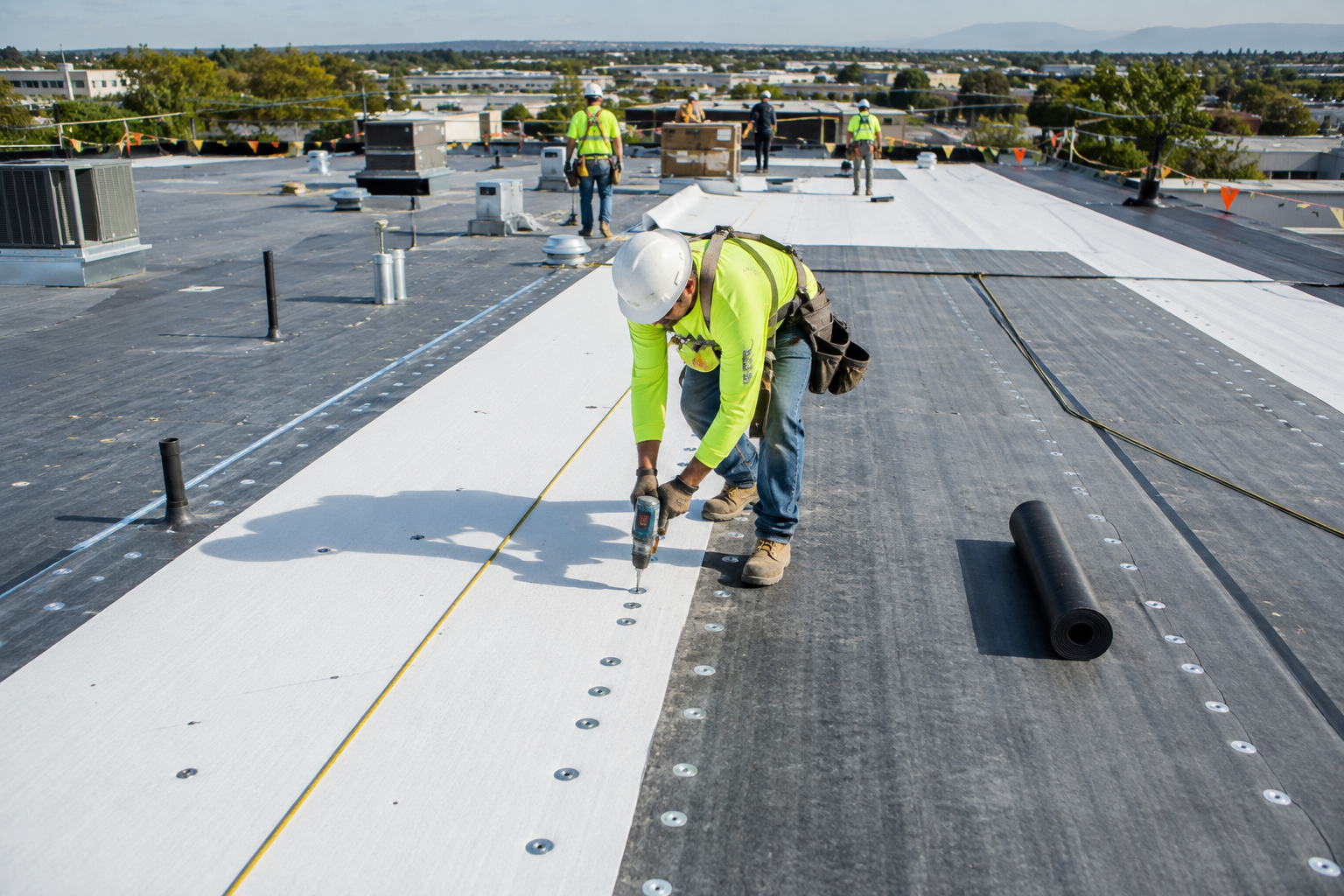
From Active Installation to Finished Commercial Roof
A Clear Path From Planning to Completed Roof
Every property is different, but a strong commercial installation process should move in a logical sequence from evaluation and planning through final completion.
Evaluate
Review building conditions, roof layout, slopes, drainage, penetrations, equipment, access, and project requirements.
Select the System
Match roofing materials and installation approach to the building, project scope, maintenance goals, and practical budget considerations.
Plan the Details
Coordinate flashing, curbs, penetrations, drains, edges, transitions, equipment, and other critical roof areas before installation progresses.
Install
Complete the roofing system according to the selected assembly and project requirements while maintaining organized rooftop work areas.
Review
Inspect the completed roof, key details, transitions, drainage areas, and final project conditions before closeout.
Built Around the Needs of Commercial Buildings
A roofing system should reflect the building beneath it. Different property types create different demands for drainage, equipment, access, occupants, maintenance, and scheduling.
Warehouses
Large flat and low-slope roof areas with drains, penetrations, equipment, inventory, and loading operations.
Office Buildings
Occupied commercial properties where roofing installation must consider tenants, HVAC systems, access, and building operations.
Retail Centers
Roofing systems planned around storefronts, tenant spaces, rooftop equipment, deliveries, and active customer environments.
Industrial Facilities
Commercial installations involving larger roof footprints, equipment, penetrations, exhaust systems, and active industrial operations.
Apartments & HOAs
Multifamily roofing where residents, common areas, shared roofs, property management, and phased installation may all matter.
Churches
Commercial roof installation for sanctuaries, offices, classrooms, fellowship spaces, and multi-building properties.
Schools
Roofing installations coordinated around classrooms, gyms, cafeterias, offices, equipment, and active campuses.
Mixed-Use Properties
Commercial roofs serving different occupants, uses, access needs, equipment zones, and operating schedules.
Not Every New Roof Project Is The Same
Commercial roof installation and commercial roof replacement overlap, but the starting conditions are different.
Commercial Roof Installation
Typically applies to new construction, additions, major renovations, or projects where a complete roof system is being installed as part of the building scope.
Commercial Roof Replacement
Usually begins with an existing roof system that has reached the point where removal, tear-off, major recovery work, or complete replacement is being considered.
Commercial Roofing Installation Across Orange County
DK Commercial Roofing provides commercial roof installation for Orange County properties that need a complete roofing system for new construction, additions, major renovations, and other commercial projects.
For location-specific information, visit our Anaheim commercial roofing and Irvine commercial roofing pages.
Related Commercial Roofing Services
Installation projects often connect with repair, maintenance, restoration, skylights, solar coordination, and other commercial roofing needs.
Questions About New Commercial Roofing?
Commercial roof installation involves system selection, building conditions, drainage, flashing, penetrations, access, and long-term maintenance—not just roofing material.