
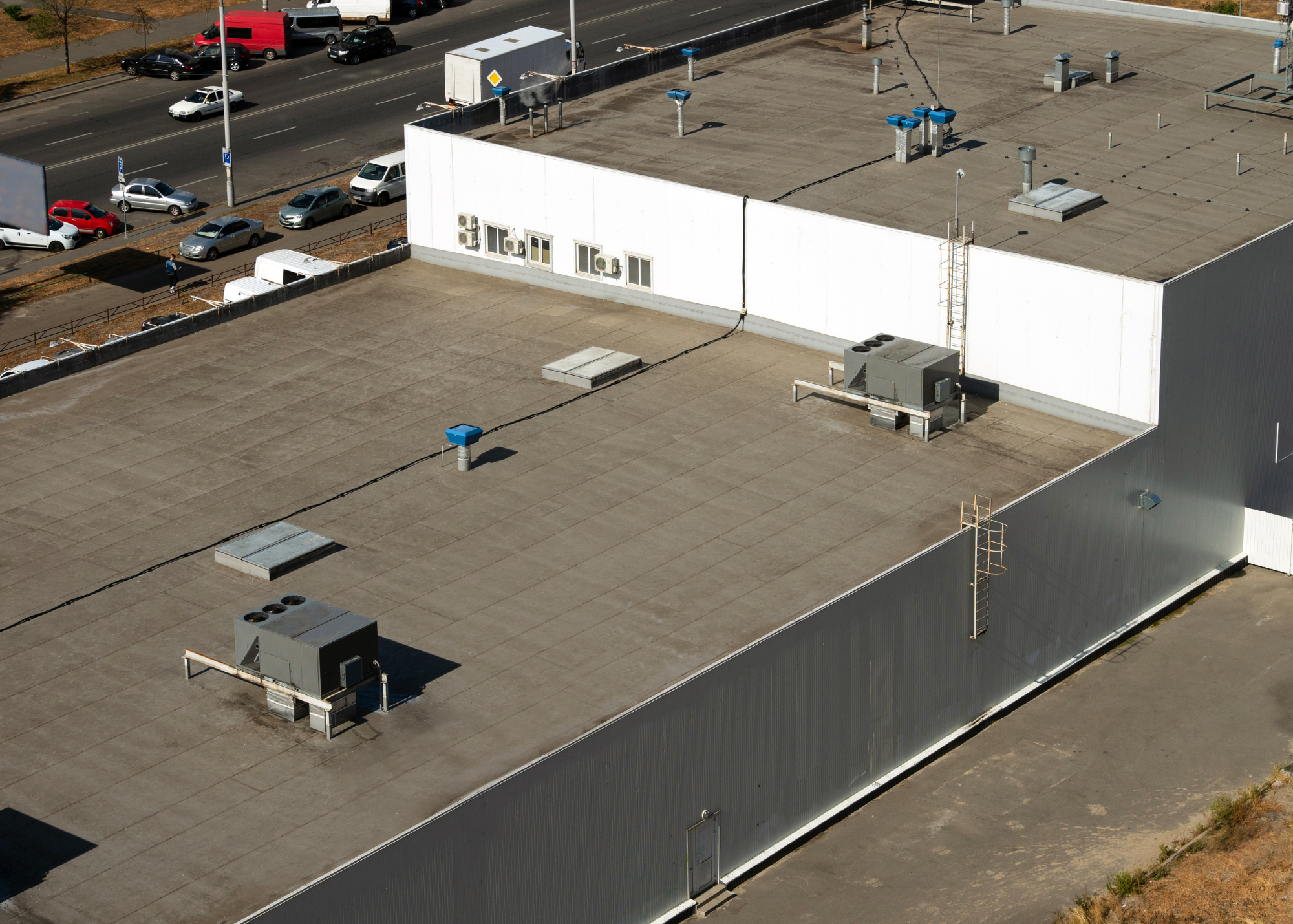
Find the Roof Leak Source Before Repairing the Wrong Area
DK Commercial Roofing provides commercial roof leak detection in Orange County for recurring leaks, intermittent water intrusion, difficult-to-trace roof problems, and commercial buildings where the interior drip does not clearly identify the exterior source. The goal is to narrow down the vulnerable roof area so the next repair decision is based on the roofing condition—not guesswork.
The Interior Drip Is Not Always Directly Below the Roof Failure
Commercial roof leaks can be frustrating because water does not always travel straight down from the entry point. Once water gets beneath roofing materials or into the building assembly, it may move along insulation, decking, structural components, seams, conduits, or other pathways before it finally appears inside.
That is why commercial flat roof leak detection in Orange County should look at the surrounding roof system—not only the exact spot above an interior stain. Membrane seams, flashing, drains, scuppers, penetrations, skylights, curbs, HVAC equipment, solar-related components, previous repair areas, and rooftop traffic can all contribute to water intrusion.
Once a likely source is identified, the next step may be targeted commercial roof leak repair, a broader commercial roof inspection, preventative roof maintenance, or evaluation for a larger roofing project.

Where Commercial Roof Leaks Often Begin
Many leak sources are concentrated around roof details, transitions, drainage, penetrations, and previously disturbed areas rather than the open center of the roof.
Membrane Seams
Open laps, failed welds, seam separation, movement, aging, or previous repairs can allow water beneath a commercial membrane.
Flashing
Parapets, walls, edges, curbs, equipment, and transition areas can leak when flashing separates, deteriorates, cracks, or loses adhesion.
Roof Penetrations
Pipes, vents, conduit, supports, mechanical equipment, solar components, and other roof openings require durable waterproofing details.
Drains & Scuppers
Blocked drainage, deteriorated drain details, ponding water, debris, and poor water flow can expose vulnerable roof areas.
Skylights & Curbs
Leaking skylights may involve seals, flashing, curb materials, surrounding roof membrane, or transitions rather than the glazing alone.
HVAC Equipment Areas
Service traffic, curbs, condensate, supports, fasteners, access panels, and repeated mechanical work can create roof vulnerabilities.
Previous Repairs
Old patches may crack, separate, weather, move differently than the surrounding roof, or conceal a larger underlying issue.
Punctures & Traffic Damage
Tools, debris, service technicians, equipment, and frequent roof access can damage membranes and create small but significant entry points.
Repairing the Wrong Spot Can Leave The Real Leak Active
A recurring leak that seems to return after every rain may not mean the repair itself failed. In some cases, there may be another nearby entry point, water may be traveling before appearing inside, or multiple roof deficiencies may be contributing to the same interior symptom.
A focused leak investigation helps narrow the likely source before additional repair work is performed. That can help owners avoid repeating the same patch in the wrong location while the actual roof deficiency remains unresolved.
Follow the Water Path
Interior leak locations, staining patterns, roof details, drainage, and surrounding conditions can help narrow down where water may be entering.
Review Nearby Roof Details
The area above the drip may look intact while a seam, flashing detail, curb, penetration, or drain several feet away is the actual source.
Consider Previous Repairs
Past repair locations and recurring leak history can provide useful clues about whether the roof has one isolated issue or several connected problems.
Choose the Right Next Step
Once the source is better understood, the owner can decide whether repair, maintenance, restoration, or replacement is the practical path.
Look Beyond the Stain and Inspect the Roof Details

From Interior Water to Likely Roof Source
Leak detection is a process of narrowing possibilities by combining what is happening inside with what is visible on the roof.
Review Leak History
Discuss when the leak appears, weather conditions, interior location, recurrence, previous repairs, roof type, and approximate roof age.
Look at Interior Clues
Consider visible staining, ceiling conditions, drip locations, affected spaces, and whether water appears to travel before becoming visible.
Inspect Roof Details
Review accessible seams, flashing, drains, penetrations, curbs, skylights, equipment, membrane areas, and previous repair locations.
Narrow the Source
Compare roof conditions with the interior leak pattern to identify the most likely vulnerable area or combination of roof deficiencies.
Choose the Repair Path
Move into targeted commercial roof repair, maintenance, broader inspection, or replacement planning based on what the roof condition supports.
Leak Detection for Working Buildings
Commercial leaks can affect different properties in very different ways. The building use, interior contents, roof equipment, occupants, and operational needs all matter.
Warehouses
Leak detection where inventory, products, equipment, drains, penetrations, and large roof areas can complicate the source.
Office Buildings
Recurring roof leaks affecting ceilings, tenant spaces, electronics, HVAC systems, and occupied workplace areas.
Retail Centers
Leak-source investigation around tenant spaces, storefronts, equipment, drains, customers, and active business operations.
Industrial Facilities
Commercial leak detection around equipment, exhaust systems, penetrations, production areas, and heavily used rooftops.
Apartments & HOAs
Recurring water intrusion affecting units, common areas, residents, shared roofs, management, and previous repair locations.
Churches
Roof leak detection for sanctuaries, offices, classrooms, fellowship areas, and other occupied interior spaces.
Schools
Leak investigation around classrooms, technology, ceilings, cafeterias, offices, gyms, and rooftop equipment.
Mixed-Use Properties
Commercial leak detection where multiple tenants, roof zones, equipment areas, and different interior uses may be affected.
Detection Should Lead to the Right Roofing Decision
The next step depends on whether the leak source is localized or part of a larger roof condition.
Commercial Roof Leak Detection Across Orange County
DK Commercial Roofing helps Orange County property owners investigate recurring and difficult-to-trace commercial roof leaks by reviewing visible roof conditions, water-entry clues, previous repair history, drainage, flashing, penetrations, equipment, and surrounding roofing details.
For location-specific commercial roofing information, visit our Anaheim commercial roofing and Irvine commercial roofing pages.
Related Orange County Roofing Services
Leak detection commonly connects with inspection, emergency repair, permanent repair, maintenance, coatings, restoration, and replacement planning.
Questions About Finding Commercial Roof Leaks?
Recurring commercial roof leaks can be difficult to trace because water may travel before becoming visible inside the building.